

If you found this guide helpful, be sure to check out our other articles on accounting topics to further enhance your knowledge and skills. Mat brings nearly a decade of experience from Shopify building financial documentation and public-facing content. His expertise in content systems, data accuracy, and web accessibility ensures every guide meets the highest standards. Every article goes through a rigorous fact-checking and editorial review process. We verify all rates, fees, and product information using authoritative primary sources including official U.S. government websites, financial institution websites, and regulatory bodies.
- For example, let’s assume that you purchased cup sealing machines amounting to $1,000, which your business will use to seal the plastic cups of bubble teas that you sell to your customers.
- The preparation and recording of adjusting entries is an important step that you need to take before preparing the financial statements of your company.
- The accounting term that means an entry will be made on the left side of an account.
- It is assumed that the decrease in the amount prepaid was the amount being used or expiring during the current accounting period.
- Following the adjusting entry rules, we need to make sure the inventory amount on the balance sheet is correct.
Definition of Accrued Revenues

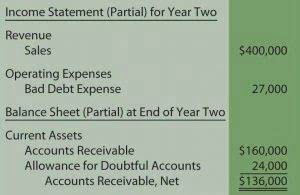
It ensures that financial statements reflect accurate revenue and expense recognition. Accruing deferred revenue increases current liabilities, while reversing deferred revenue decreases current liabilities. This can impact the company’s cash flow by affecting the timing of cash receipts and expenses. The concept of bad debts is in accordance with the matching principle wherein https://elrayah.com/?p=3072 the estimated uncollectible accounts should be expensed in the same period as the related sales were made. This practice of recognizing bad debts is a normal business practice and is part of the operating expenses of a company. The goal of accrual accounting is to record income and expenses in the period where the real economic transaction occurred rather than when cash is exchanged.
Why do we make adjusting entries for unearned revenue?
- His expertise in content systems, data accuracy, and web accessibility ensures every guide meets the highest standards.
- At the end of the accounting year, the ending balances in the balance sheet accounts (assets and liabilities) will carry forward to the next accounting year.
- The amount in this entry may be a percentage of sales or it might be based on an aging analysis of the accounts receivables (also referred to as a percentage of receivables).
- This attention to periodicity helps companies align with the entity’s financial reporting obligations, ensuring that all transaction processing fits within the minimum compliance standards.
- Each account is used to record a specific type of transaction, such as the receipt of cash or the payment of an expense.
- Adjusting entries also play a vital role in managing payables, ensuring that outstanding debts to vendors are properly recorded at the right timing within the calendar period.
It’s the financial equivalent of admitting that your shiny new computer won’t be shiny or new forever. A balance on the adjusting entries right side (credit side) of an account in the general ledger. The accounting term that means an entry will be made on the left side of an account. The seller refers to the invoice as a sales invoice and the buyer refers to the same invoice as a vendor invoice. Adjusting entries and closing entries for the month are prepared as shown above.
Procedures for Accruing Revenues

In conclusion, bookkeeping is the process of recording financial transactions of a business. The bookkeeper is responsible for maintaining accurate records of all financial transactions, which includes recording adjusting entries in the adjusting journal entries. The importance of adjusting entries in financial statements cannot be overstated. Without these entries, financial statements would not provide an accurate representation of a company’s financial position. Adjusting entries ensure that revenue and expenses are recognized in the correct accounting period, and that assets and liabilities are accurately recorded.
Accrued revenues, also known as unearned revenues, represent revenues that have been earned but not yet received in cash. This concept arises when a company provides goods or services before receiving payment. Recognizing these accrued revenues on the balance sheet is essential in presenting a true and fair view of a company’s financial performance.
This could result in incorrect financial decisions and potential issues with tax reporting and compliance. They ensure that the account balances are accurate and that the financial statements reflect the true financial position and performance of the business. The three things to always consider in adjusting entries are the account balances, the financial statements, and the accounting equation. Adjusting entries must ensure that the account balances are accurate, the financial statements are complete and correct, and the accounting equation is in balance.
In adjusting entries, it is important to ensure that the value of receivable accounts is accurately reflected in the balance sheet accounts. They’re the janitors of the adjusting entries accounting world – cleaning up the mess left behind by the relentless forward march of time and money. Typically, an entry involves two accounts – one from the income statement and one from the balance sheet – and gets logged in the company’s general ledger. When expenses are income summary prepaid, a debit asset account is created together with the cash payment.